
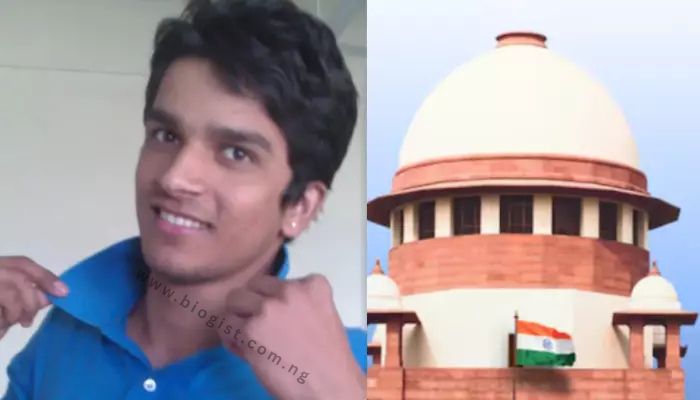
Introduction to Harish Rana
Harish Rana Biography: A Story of Life, Tragedy, and a Landmark Legal Battle
Harish Rana’s story is not just a biography—it’s a deeply emotional narrative that touches on life, suffering, dignity, and the difficult decisions families sometimes face. If you’ve ever wondered how a single life can influence national legal frameworks, this story will make you pause and think. Harish Rana became a widely discussed name in India after his case led to a historic legal decision on passive euthanasia in 2026.
But before the headlines, before the courtroom debates, Harish was simply a young man with dreams, ambitions, and a future ahead of him. His life took a tragic turn in 2013, and what followed was more than a decade of medical uncertainty, emotional endurance, and legal battles. His journey highlights the fragile boundary between survival and meaningful living, a topic that continues to spark global debate.
This article explores his life in detail—from his early days to the accident, the years of suffering, and the landmark Supreme Court ruling that changed how India views end-of-life care. By the end, you’ll not only understand who Harish Rana was, but also why his story matters so much today.
Early Life and Background
Childhood and Family Life
Harish Rana was born and raised in Ghaziabad, Uttar Pradesh, into a modest and close-knit family. Like many young boys growing up in India, his childhood was filled with simple joys—playing with friends, attending school, and dreaming about a bright future. His parents described him as energetic, cheerful, and deeply passionate about life.
Family played a central role in Harish’s upbringing. His parents invested heavily—not just financially, but emotionally—in his future. They encouraged education, discipline, and ambition, hoping he would achieve more than they had. These values shaped Harish into a determined young man who believed in hard work and perseverance.
What makes his story even more heartbreaking is how ordinary it began. There was nothing extraordinary about his early life—no fame, no controversy—just a young man preparing to build a career and make his family proud. That normalcy is exactly what makes the later tragedy so impactful. It reminds us how quickly life can change, often without warning.
Education and Aspirations
Harish Rana was a B.Tech (engineering) student at Panjab University when life took a devastating turn. He was known to be a bright and enthusiastic student who had clear ambitions of building a successful career in engineering. Like many students, he was chasing independence, success, and the ability to support his family.
He wasn’t just academically inclined—he was also passionate about fitness and sports. According to reports, Harish loved football and maintained an active lifestyle, spending time at the gym and engaging in physical activities. This paints a picture of a vibrant young man who enjoyed life to the fullest.
Imagine being at that stage of life—where everything feels possible—and suddenly, everything stops. That’s exactly what happened in 2013. His dreams, education, and personal growth came to a sudden halt, marking the beginning of a long and painful journey.
The Tragic Accident
What Happened in 2013
Harish Rana Biography: A Story of Life, Tragedy, and a Landmark Legal Battle
In August 2013, Harish Rana’s life changed forever. He fell from the fourth floor of his paying guest accommodation near his university in Chandigarh. The fall caused severe traumatic brain injury, leaving him in a critical condition.
This wasn’t just a minor accident—it was catastrophic. The injury resulted in permanent brain damage, and from that moment, Harish never regained consciousness. He slipped into what medical professionals call a persistent vegetative state, a condition where a person is alive but lacks awareness of themselves or their surroundings.
Think about that for a second. A young, healthy individual, full of dreams, suddenly reduced to a state where he cannot interact, speak, or respond meaningfully. It’s not just tragic—it’s almost unimaginable. His accident didn’t just affect him; it completely altered the course of his family’s life as well.
Immediate Medical Response
After the accident, Harish was rushed to a nearby hospital and later transferred to specialized medical facilities, including PGIMER Chandigarh and AIIMS Delhi. Doctors did everything they could—ventilatory support, medication, surgeries—but the damage was too severe.
Despite intensive treatment, there was no significant improvement. Medical reports consistently showed no signs of recovery, even after years of care. He remained bedridden, dependent on feeding tubes and medical support for survival.
At this stage, the hope that initially kept the family going slowly began to fade. What started as a fight for recovery gradually turned into a long-term struggle for survival, raising difficult questions about quality of life and the limits of medical intervention.
Life in a Vegetative State
Medical Condition Explained
Harish Rana was diagnosed with a persistent vegetative state (PVS), a condition where a patient may open their eyes or exhibit sleep-wake cycles but shows no conscious awareness. In simpler terms, the body is alive, but the mind is not functioning in any meaningful way.
He also suffered from quadriplegia, meaning complete paralysis of all four limbs. This made him entirely dependent on caregivers for even the most basic needs—feeding, cleaning, and movement.
Doctors observed that while he could occasionally open his eyes, there was no response to sound, touch, or pain. This state continued for over 13 years, with no improvement whatsoever. Medical experts concluded that the chances of recovery were virtually zero.
Daily Struggles and Care
Living in a vegetative state isn’t just about being unconscious—it comes with a host of complications. Harish suffered from infections, seizures, pneumonia, and painful bedsores over the years. Each complication required medical attention, adding to the already heavy burden on his family.
His daily care involved constant monitoring, feeding through tubes, and regular medical check-ups. This wasn’t something that could be managed casually—it required full-time attention and significant financial resources.
Imagine caring for someone like this for over a decade. It’s physically exhausting, emotionally draining, and financially crippling. Yet, his parents continued to care for him with unwavering dedication, even when hope seemed almost nonexistent.
Family’s Emotional and Financial Struggles
Sacrifices Made by Parents
Harish Rana’s parents went through unimaginable hardship. To fund his treatment, they sold their house and spent their savings on medical care. Monthly expenses for nursing and physiotherapy alone ran into thousands of rupees.
They didn’t just lose their financial stability—they lost their normal life. Everything revolved around Harish’s care. Vacations, social life, and personal comfort were all sacrificed.
This level of dedication shows the depth of parental love, but it also raises a difficult question: How long can a family sustain such a burden without any hope of recovery?
Psychological Impact on Family
The emotional toll was just as heavy. Watching a loved one remain unresponsive for years can be devastating. It creates a constant cycle of hope and despair.
Harish’s parents described their journey as one of silent suffering. They had to make decisions no parent should ever face—whether to continue treatment or allow their son to pass away peacefully.
This psychological burden eventually led them to seek legal intervention, marking the beginning of a historic legal battle.
The Legal Journey
Delhi High Court Petition
Harish Rana Biography: A Story of Life, Tragedy, and a Landmark Legal Battle
In 2024, Harish’s father approached the Delhi High Court seeking permission for passive euthanasia. However, the court rejected the plea, stating that Harish was not dependent on mechanical ventilation and did not meet the criteria for terminal illness.
This decision forced the family to continue a situation they believed was prolonging suffering rather than preserving life.
Supreme Court Intervention
Unsatisfied with the High Court’s decision, the family approached the Supreme Court. The case gained national attention, sparking debates about ethics, law, and human dignity.
Medical boards were formed to assess Harish’s condition, and their findings were clear: there was no chance of recovery.
Landmark Supreme Court Judgment (2026)
What the Court Decided
On March 11, 2026, the Supreme Court of India delivered a historic verdict, allowing the withdrawal of life-sustaining treatment for Harish Rana.
The court emphasized that this decision was not about choosing death, but about recognizing when treatment no longer serves a meaningful purpose.
Why the Case Was Historic
This was the first practical implementation of passive euthanasia laws in India. It set a precedent for future cases and clarified legal procedures for end-of-life decisions
Understanding Passive Euthanasia
Passive euthanasia involves withdrawing medical support, allowing the patient to die naturally. Unlike active euthanasia, it does not involve deliberate actions to cause death.
Ethical Debate Around the Case
The case sparked intense debates. Some argued it upheld dignity, while others feared misuse. It raised fundamental questions: What defines life? Is survival enough?
Public and Media Reaction
The public response was mixed but largely empathetic. Many supported the decision, seeing it as an act of compassion.
Lessons from Harish Rana’s Story
Harish Rana’s story teaches us about resilience, love, and the importance of dignity in life and death.
Conclusion
Harish Rana’s life may not have followed the path he dreamed of, but his story changed lives across a nation. His case forced society to confront uncomfortable truths and rethink what it means to live with dignity.
FAQs
1. Who was Harish Rana?
Harish Rana was an Indian engineering student who became the center of a landmark euthanasia case after remaining in a vegetative state for over a decade.
2. What caused his condition?
He suffered a severe brain injury after falling from a building in 2013.
3. What is passive euthanasia?
It is the withdrawal of life-support treatment, allowing natural death.
4. Why is his case important?
It led to the first real implementation of passive euthanasia laws in India.
5. When did the Supreme Court give its verdict?
The verdict was delivered on March 11, 2026.